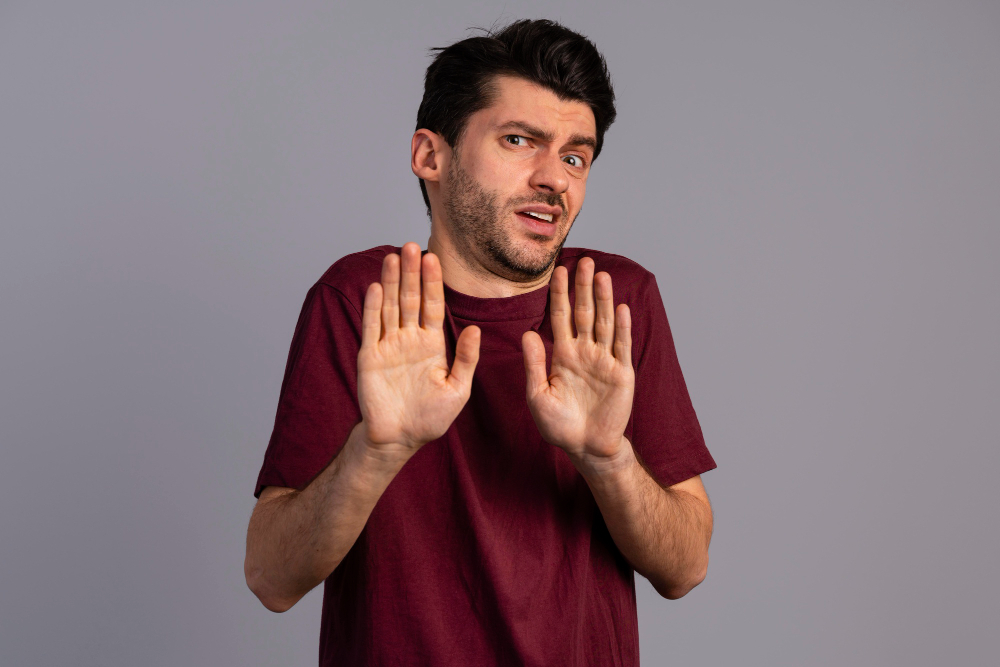
Your fearful avoidant ex is gone for days.
You checked their profile this morning. Before coffee. Maybe before you even sat up properly. You told yourself yesterday you wouldn’t and then your thumb just went there anyway.
Nobody talks about how automatic it gets. How your phone becomes this little machine for measuring their silence. Last seen. Active now. Story viewed. You are basically forensic at this point and you did not sign up for any of it.
A fearful avoidant attachment breakup does this to people. Other breakups have a shape to them. Someone leaves, it hurts, and eventually the hurt changes into something else. This one stays weird and alive because nothing about it was clean. One minute they were planning something for your birthday and the next they had decided it was never going to work. No argument that explained it. No proper ending. Just gone, and somehow you are the one left sorting through the wreckage trying to figure out what actually happened.
What fearful avoidant attachment actually set you up for
The reason this particular heartbreak keeps people stuck longer than others comes down to how the relationship felt when it was good.
People with fearful avoidant attachment dive in and hold on fiercely, which is not the version of avoidance most articles describe. So when you were in it, it felt enormous. Intense. Like finally. Your nervous system registered that feeling and filed it under important, and now it keeps sending you back there looking for it.
They are desperate to be loved but terrified to be seen, so when commitment came up, they withdrew. Not because they did not care. Because caring is exactly what scared them.
You probably understood this even while it was happening. You gave them room. You did not push. You got very good at reading their moods and adjusting yourself accordingly. What that took from you over time, you might not have fully counted yet.
The cycle is what you are actually grieving
Most people coming out of a fearful avoidant attachment relationship think they are grieving a person. Some of that is true. But a lot of what keeps people up at night is something older than this particular ex.
Hot and cold behaviour leaves partners feeling bewildered and insecure , and that feeling compounds over time into a kind of hypervigilance. You stopped trusting your own read of the situation. You started trying to manage their emotional temperature instead of tracking your own. That is a thing that happened to you and it has a weight to it separate from missing them.
Grieving the pattern is harder than grieving a person because with a person you can eventually reach acceptance. With a pattern you have to first notice you were in one.
They might come back. Here is the full truth about that
Some do. Fearful avoidants often rebound quickly after a breakup, not because they have moved on, but because their fear of vulnerability drives them toward a new source of connection. Then the quiet sets in. The real grief arrives. And some of them do reach back.
What the hopeful posts leave out is the timeline. By the time genuine regret lands on a fearful avoidant, weeks or months have passed. If you spent that whole window waiting, you meet them in exactly the same place you were when they left. Nothing has shifted. The cycle restarts from the top.
Fearful avoidants run away to avoid being abandoned first. That core wound does not change because they missed you. Only actual work on their part changes it. Wanting you back is not the same thing as having done that work.
No contact is not a strategy, it is a decision
A lot of people doing no contact after a fearful avoidant attachment breakup are essentially waiting with their phone face-down. Tracking if they have viewed the story. Calculating how long the silence has been. That is not no contact, that is surveillance with extra steps.
Real distance from someone is just deciding that your nervous system has been on high alert for long enough. That your Sundays belong to you again. Not to see if they notice. Just because you have earned a morning that does not start with checking.
That shift sounds small. It is not small.
What to actually do right now
None of this is a dramatic turning point. Recovery from fearful avoidant attachment relationships is mostly small, boring, consistent actions.
Start noticing where your life got smaller. The plans you stopped making because their availability was never predictable. The things you stopped wanting out loud because wanting things made them pull back. Pick one of those things back up this week. Not as a statement. Just because it was yours.
Let yourself be properly angry at some point. Not at them specifically, just at the whole setup. At the years of attachment psychology you read at midnight trying to understand someone who could not consistently show up. That frustration is not bitterness. It is worth honouring how much you had to navigate, and how well you did it, before you can fully let it go.
Stop treating their behaviour as a verdict on you. Fearful avoidant attachment forms in early childhood, long before you existed. Their inability to stay was not information about whether you were worth staying for.
Get some structure around your recovery. Not another thread. Not another YouTube deep dive on disorganised attachment at 1am. Something daily that meets you where you actually are and moves you forward incrementally. That is what Let It Go is built for.
The last thing
You are not waiting for them. Not really. You are waiting for the feeling of being chosen by someone who kept almost choosing you and then not. That feeling of almost is one of the most addictive things a relationship can produce and it does not go away through understanding it. It goes away through replacing it with something more reliable, starting with yourself.
Your healing does not begin when they decide to come back. It begins whenever you stop making that the condition.
Download Let It Go. The breakup recovery app built for the specific grief of fearful avoidant attachment relationships. Start today.






Leave a Reply