
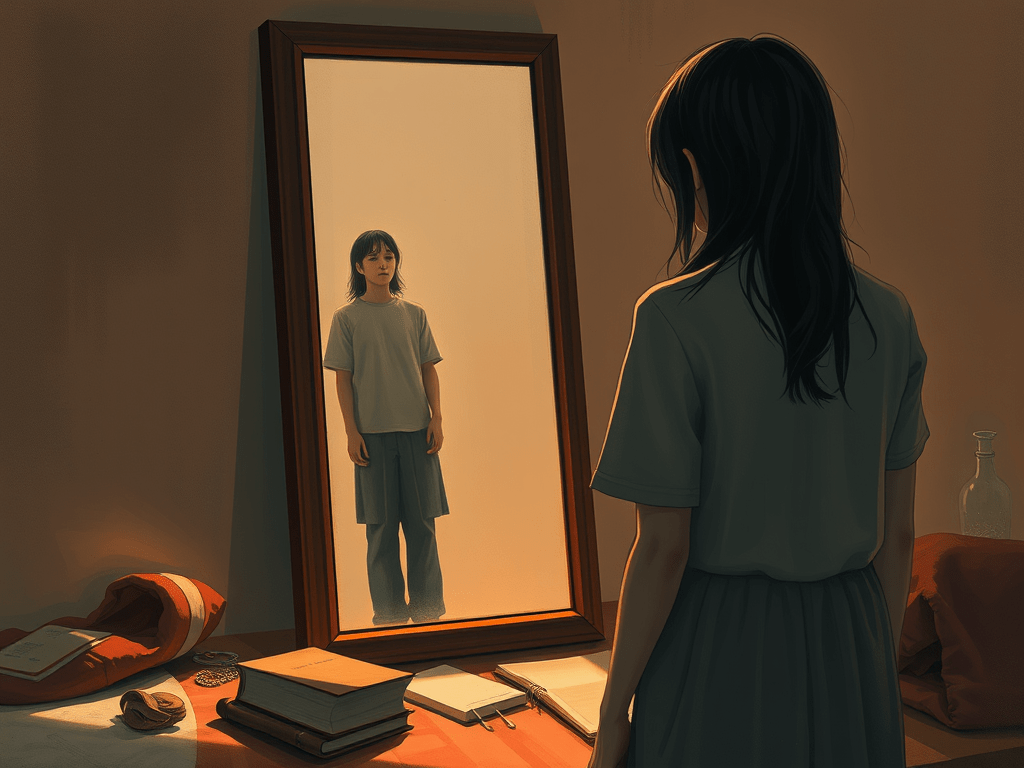
One minute you felt loved, desired, and complete. The next, you’re questioning everything about yourself. “Am I not good enough? What’s wrong with me? Will anyone ever love me again?” If you’re wondering “why do I feel so worthless after the breakup,” you’re experiencing one of the most universal yet misunderstood aspects of relationship loss.
You’re Not Broken—Your Brain Is Just Doing Its Job
Feeling worthless after a breakup isn’t a character flaw—it’s neuroscience.
When someone rejects us romantically, our brains interpret it as a threat to survival. The same neural pathways that activate when we experience physical pain light up during emotional rejection. Your self-esteem crash isn’t weakness; it’s your attachment system trying to make sense of losing someone your brain classified as essential to your wellbeing.
Research from UCLA shows that breakup pain activates the anterior cingulate cortex and right ventral prefrontal cortex—the same regions that respond to physical injury. This is why heartbreak literally hurts, and why your sense of self-worth feels shattered alongside your heart.
The Psychology Behind Post-Breakup Worthlessness
Your Identity Gets Intertwined
During relationships, especially long-term ones, your identity becomes partially defined by being someone’s partner. You might have introduced yourself as “Sarah’s boyfriend” or made decisions based on “what we want.” When that relationship ends, you’re left with an identity gap.
Dr. Art Aron’s research on self-expansion in relationships shows that we literally incorporate our partners into our sense of self. When they leave, it feels like losing part of who you are—because, psychologically, you have.
The Rejection Wound Runs Deep
Human beings are wired for connection. Thousands of years ago, being rejected by your tribe meant death. While being single today won’t kill you, your primitive brain doesn’t know that. Rejection triggers ancient survival fears, making you question your fundamental worthiness of love and belonging.
Your Inner Critic Goes Into Overdrive
After a breakup, your mind often becomes a harsh prosecutor, putting your entire relationship—and yourself—on trial:
- “If I was worth loving, they wouldn’t have left”
- “I must have done something wrong”
- “Maybe I’m just unlovable”
- “Everyone else seems to make relationships work—what’s wrong with me?”
This self-critical thinking pattern, while painful, is your brain’s attempt to regain control. If you can figure out what you did “wrong,” maybe you can prevent future rejection. Unfortunately, this often leads to distorted self-perception and damaged self-esteem.
Different Types of Post-Breakup Worthlessness
Situational Self-Esteem Crash
This hits immediately after the breakup and is directly tied to the loss. You might feel worthless specifically in the context of relationships while maintaining confidence in other life areas like work or friendships.
Signs of situational worthlessness:
- “I’m terrible at relationships but good at my job”
- Confidence varies dramatically by situation
- Self-doubt focuses mainly on romantic desirability
Deep-Rooted Worth Questioning
This occurs when the breakup triggers pre-existing insecurities or attachment wounds. The relationship loss becomes evidence for deeper beliefs about your fundamental unlovability.
Signs of deep-rooted worthlessness:
- “I always knew I wasn’t good enough”
- Self-criticism extends beyond the relationship to all life areas
- Feelings persist even when logically you know the breakup wasn’t entirely your fault
Trauma-Bonded Worth Confusion
If you experienced emotional abuse, manipulation, or gaslighting, your sense of worth may have been systematically eroded during the relationship. The breakup can feel like confirmation of the negative messages you received.
Signs of trauma-bonded worthlessness:
- Believing their criticisms of you were accurate
- Feeling relief and devastation simultaneously
- Struggling to identify what you actually want or value
Why Some People Feel More Worthless Than Others
Stanford research reveals that individuals with different attachment styles experience breakups differently:
Anxiously Attached: More likely to blame themselves and feel unworthy of love. They often experienced inconsistent caregiving in childhood, making rejection feel familiar but devastating.
Avoidantly Attached: May feel worthless about their inability to maintain emotional intimacy, often criticizing themselves for being “too independent” or “emotionally unavailable.”
Securely Attached: Generally maintain better self-esteem through breakups, viewing the end as incompatibility rather than personal failure.
Your attachment style isn’t your fault, but understanding it can help explain why this breakup hit your self-worth so hard.
The Immediate Aftermath: Why Everything Feels Amplified
Sleep and Appetite Disruption
Breakup stress disrupts cortisol and serotonin levels, affecting sleep quality and appetite. Poor physical self-care creates a cycle where you feel worse about yourself, feeding feelings of worthlessness.
Social Comparison Trap
Social media becomes particularly toxic after breakups. Seeing your ex moving on, coupled friends, or even random happy people can feel like evidence that you’re uniquely unlovable. Remember: social media is everyone’s highlight reel, not reality.
Rumination Spiral
Your brain keeps trying to solve the “problem” of the breakup by analyzing what went wrong. This rumination often focuses on your perceived failures, reinforcing worthless feelings and preventing emotional healing.
Red Flags: When Worthlessness Becomes Concerning
While feeling worthless after a breakup is normal, certain signs indicate you might need professional support:
- Persistent self-harm thoughts or behaviors
- Complete inability to function in daily life for more than 2-3 weeks
- Substance abuse to cope with the pain
- Isolation from all friends and family for extended periods
- Persistent sleep disruption lasting more than a month
- Thoughts that you’ll never recover or that life isn’t worth living
These symptoms may indicate clinical depression or complex grief that requires professional intervention.
Rebuilding Your Worth: A Science-Based Recovery Plan
Phase 1: Stabilization (Weeks 1-4)
Focus on basic self-care:
- Maintain regular sleep schedule (crucial for emotional regulation)
- Eat nutritious meals even when you don’t feel like it
- Limit social media consumption, especially your ex’s profiles
- Practice the “observe, don’t absorb” technique with negative thoughts
Essential mindset shift: You’re not trying to feel better immediately. You’re trying to stop feeling worse while your brain processes the loss.
Phase 2: Separation (Weeks 4-12)
Begin identity reconstruction:
- List qualities that existed before the relationship
- Reconnect with pre-relationship interests and friendships
- Challenge negative self-talk with evidence-based responses
- Start journaling to process emotions without judgment
Key insight: You aren’t half a person seeking completion. You’re a whole person who shared life with someone else for a while.
Phase 3: Rebuilding (Months 3-6+)
Actively reconstruct self-worth:
- Set small, achievable goals to rebuild confidence
- Practice self-compassion techniques (treat yourself like a good friend)
- Explore new activities that align with your individual values
- Consider therapy to address underlying attachment patterns
Remember: Healing isn’t linear. You’ll have good days and setbacks. Both are part of the process.
Cognitive Restructuring: Changing the Internal Narrative
Replace Worthlessness Thoughts With Balanced Thinking:
Instead of: “I’m unlovable”
Try: “This person and I weren’t compatible, but that doesn’t determine my overall lovability”
Instead of: “I always mess up relationships”
Try: “I made some mistakes in this relationship, and I can learn from them without defining myself by them”
Instead of: “No one will ever want me”
Try: “I’m in pain right now, but my worth isn’t determined by one person’s decision to leave”
The Evidence Technique
When worthlessness thoughts arise, ask yourself:
- What evidence supports this thought?
- What evidence contradicts it?
- What would I tell a friend thinking this way?
- Is this thought helping me heal or keeping me stuck?
Building Anti-Fragile Self-Worth
Internal vs. External Worth
Relationships can enhance your life, but they shouldn’t be your primary source of self-worth. Develop multiple sources of value:
- Personal growth and learning
- Contributions to others’ lives
- Creative expression
- Physical health and strength
- Spiritual or philosophical development
The Growth Mindset Approach
Instead of viewing the breakup as evidence of your fixed flaws, reframe it as data for growth:
- What did this relationship teach you about your needs?
- Which communication skills could you develop?
- How can you better maintain your identity within future relationships?
- What boundaries will you set differently next time?
Moving From Victim to Victor
Reclaim Your Narrative
You’re not the person who “got broken up with.” You’re the person who:
- Loved deeply and authentically
- Learned valuable lessons about compatibility
- Survived a significant life challenge
- Is actively working on personal growth
Post-Traumatic Growth
Research shows that many people experience positive psychological changes after difficult life events, including:
- Deeper appreciation for relationships
- Stronger sense of personal resilience
- Clearer understanding of personal values
- Greater compassion for others’ struggles
Your worthless feelings today can become tomorrow’s wisdom and strength.
The Timeline: What to Expect
Week 1-2: Intense emotional pain, confusion, and worthlessness feelings are normal Month 1: Acute symptoms begin stabilizing, though bad days still occur frequently
Month 3: Noticeable improvement in daily functioning and self-perception Month 6+: Significant recovery in self-worth, though occasional setbacks are normal Year 1: Most people report feeling emotionally available for new relationships
Remember: This timeline varies based on relationship length, attachment style, and support systems.
Your Worth Was Never Up for Debate
Here’s what your ex-partner’s decision to leave actually means: you weren’t compatible with this specific person at this specific time in both your lives. That’s it.
It doesn’t mean:
- You’re unworthy of love
- You’ll never find someone better suited for you
- Something is fundamentally wrong with you
- You failed as a person
Your worth exists independent of anyone else’s recognition of it. The breakup revealed incompatibility, not inadequacy.
Creating Your Support System
Professional Support
- Therapists specializing in relationships can help process attachment wounds
- Support groups connect you with others having similar experiences
- Life coaches can help rebuild confidence and set new goals
Personal Support Network
- Trusted friends who listen without trying to “fix” you
- Family members who knew you before the relationship
- Mentors or older adults who’ve navigated similar challenges
- Online communities focused on healthy healing (like Let It Go app users)
Building Future Relationship Resilience
Maintain Individual Identity
In future relationships:
- Keep individual friendships and interests
- Maintain personal goals independent of the relationship
- Regular self-reflection about your needs and boundaries
- Continue personal growth activities
Secure Attachment Practices
- Communicate needs directly instead of hoping they’ll be intuited
- Address conflicts promptly rather than avoiding or exploding
- Maintain realistic expectations about what partners can provide
- Practice emotional regulation skills for relationship stress
The Bottom Line: You Are Not Your Worst Moment
Feeling worthless after a breakup is one of the most universally human experiences. It’s painful, confusing, and feels endless when you’re in it. But it’s also temporary and treatable.
Your worth isn’t determined by whether someone chose to stay in your life. It’s not measured by your relationship status, your ability to prevent breakups, or your ex-partner’s opinion of you.
You are worthy of love—from others and, most importantly, from yourself—not because you’re perfect, but because you’re human. Your capacity to love deeply, even when it leads to pain, is evidence of your emotional strength, not weakness.
The person who will love you completely is still out there. But first, that person needs to be you.
This breakup isn’t the end of your love story. It’s the painful but necessary chapter that teaches you what you truly need and deserve. Your worthlessness feelings are temporary visitors, not permanent residents.
Trust the process. Trust your resilience. And most of all, trust that your worth was never up for debate—it’s a fundamental truth about who you are.
Ready to transform your breakup pain into personal growth? The Let It Go app is a free breakup app that provides daily guided exercises, community support, and evidence-based tools to help you rebuild your self-worth after heartbreak. Download Let It Go today and start your journey from surviving to thriving. Your future self is waiting.






 Let it Go
Leave a comment