
Have you ever wondered why you keep ending up in the same type of relationship, even when you promised yourself it would be different this time? Or why that person who seemed so wrong for you felt so irresistibly right in the beginning? You’re not alone—and more importantly, you’re not broken. What you’re experiencing is one of the most profound psychological patterns that shapes our adult relationships: the unconscious pull toward what feels familiar, even when familiar means painful.
The Invisible Force: Why We Marry Our Unfinished Business
There’s a saying in psychology: “We marry our unfinished business.” It sounds dramatic, but the truth is far more nuanced and deeply human than you might think.
When we grow up with certain emotional experiences—particularly those involving our parents or primary caregivers—our unconscious mind creates a kind of template. This isn’t about blame or dwelling on the past; it’s about understanding how our early experiences shape what feels comfortable and familiar to us as adults. And here’s the paradox:
Familiar doesn’t always mean good. Familiar just means known.
Let’s say you had a parent who was emotionally withdrawn or unpredictable. As a child, you couldn’t control that situation—you were powerless. But your unconscious mind hasn’t forgotten. Now, as an adult, you might find yourself inexplicably drawn to partners who are also emotionally unavailable or inconsistent. Why? Because your unconscious is saying, “
You look familiar. Come closer.
Your unconscious isn’t trying to hurt you—it’s actually trying to master a situation where you once felt helpless. It’s thinking, “This time, I’m going to win. This time, I’ll get the love from that kind of person that I couldn’t get before.” But here’s the problem: you can’t fix your childhood wounds through your adult relationships. The person you’re dating isn’t your parent, and recreating familiar pain won’t heal the original wound.
The Comfort of the Cage: Why We Stay Stuck
Think about a prisoner desperately shaking the bars of their cell, trying to escape. But if you zoom out, you’d see something remarkable: on the right and left sides of the cage, there are no bars at all. The prisoner could simply walk around them to freedom. So why don’t they?
Because with freedom comes responsibility and uncertainty.
We know what it’s like to be in our familiar prison. It’s predictable. It’s known. Yes, it’s uncomfortable—maybe even miserable—but it’s
ours. Walking around those bars into the unknown? That’s terrifying. What if we can’t handle the freedom? What if we make the wrong choice? What if there’s something worse out there?
This is why so many people stay in relationships that don’t serve them, or repeatedly choose the same type of partner who hurts them. It’s not because they don’t know better or because they don’t deserve better. It’s because
the certainty of misery feels safer than the misery of uncertainty.
The Betrayal of Chemistry: When Sparks Mean Danger
Here’s where it gets really tricky: the people who are wrong for us often feel
right—at least at first. That electric chemistry, those butterflies, that magnetic pull? Sometimes that’s not love or compatibility. Sometimes it’s your unconscious recognizing a familiar pattern and lighting up like a Christmas tree.
A woman comes into therapy saying she’s attracted to a certain type of guy. He’s exciting, unpredictable, doesn’t call when he says he will. She feels this intense pull toward him. Meanwhile, she goes on dates with reliable, kind men who
do call when they say they will—and she feels… nothing. “No chemistry,” she says.
But here’s what’s really happening: The “exciting” guy feels familiar because he recreates a childhood dynamic where love was unpredictable and had to be earned. That feeling she’s calling chemistry? It’s actually anxiety mixed with the hope that this time, she’ll finally be chosen. The reliable guys don’t trigger that familiar pattern, so her unconscious doesn’t recognize them as potential partners. There’s no friction, no familiar pain to work through—and so it feels flat.
The good news? With awareness and work, that can change. After working through these patterns in therapy, this same woman eventually became attracted to men who treated her well. She learned to recognize that the lack of drama wasn’t boring—it was peace. And peace, it turns out, is what healthy love actually feels like.
How to Recognize Your Patterns: The Warning Signs
So how do you know if you’re caught in one of these unconscious patterns? Here are some key indicators:
1. You Keep Choosing the Same Type of Partner
They may look different on the surface—different jobs, different appearances, different personalities. But underneath, they’re the same in the ways that hurt. Maybe they’re all emotionally unavailable. Maybe they all have anger issues. Maybe they all prioritize work over relationships. If you can spot a pattern in your dating history, your unconscious probably has a “type”—and not in a good way.
2. Strong Chemistry Often Leads to Pain
If you find that the people you’re most intensely attracted to end up hurting you repeatedly, pay attention. That intensity might not be passion—it might be your nervous system recognizing a familiar (but unhealthy) dynamic.
3. Kind, Stable People Feel “Boring”
If reliable, emotionally available people consistently feel bland or uninteresting to you, that’s a red flag. Your system may be so accustomed to chaos or unpredictability that calm feels wrong.
4. You Have the Same Fight in Every Relationship
Maybe it’s always about feeling unseen. Or always about feeling controlled. Or always about feeling like you’re not enough. If the core conflict remains the same across different partners, the common denominator is your unresolved wound.
5. You Feel Like You Can “Fix” or “Save” Your Partner
This is a huge one. If you’re drawn to people who need rescuing or changing, you’re likely trying to master an old dynamic where you felt powerless. But adults don’t need to be fixed—and trying to fix someone else will only drain you.
The Path Forward: Recalibrating Your Internal Compass
Breaking these patterns isn’t about forcing yourself to date people you’re not attracted to. It’s about understanding why you’re attracted to the people you are, and then
recalibrating your internal thermostat for what feels right.
Think of it this way: Some people grow up in homes where a slight mistake was treated as a catastrophe, so their thermostat is set wrong. They think 100 degrees (crisis mode) is normal room temperature. Other people grow up in homes where serious problems were minimized, so they think 40 degrees (neglect or abuse) is just fine. They don’t know how to recognize when the temperature is actually dangerous because their gauge has always been off.
Healing means learning what 72 degrees actually feels like—what healthy, balanced love looks and feels like—so you can recognize it when you encounter it.
Practical Steps to Break the Cycle
Step 1: Get Honest About Your Pattern
Look at your relationship history with clear eyes. Write down the patterns you see. Which parent does your type resemble? What childhood wound are you trying to heal? This isn’t about blame—it’s about awareness.
Step 2: Question Your Gut
We’re often told to “trust your gut” in relationships. But if your gut has been leading you to the same painful place over and over, it’s time to question it. Your gut is reacting to
familiarity, not necessarily to what’s good for you.
Sometimes the healthiest thing you can do is the opposite of what your gut tells you. If your first instinct is to chase someone who’s pulling away, try something different: let them go. If your gut says someone reliable is “too nice,” give them a second and third date anyway. You’re building a new neural pathway—and that takes practice.
Step 3: Ask Better Questions
Instead of asking “Do I feel chemistry with this person?” ask “How do I feel when I’m with this person?” The answer should be:
• Calm
• Safe
• Seen
• Content
Not:
• Anxious
• On edge
• Desperate for their approval
• Walking on eggshells
Step 4: Do the Work
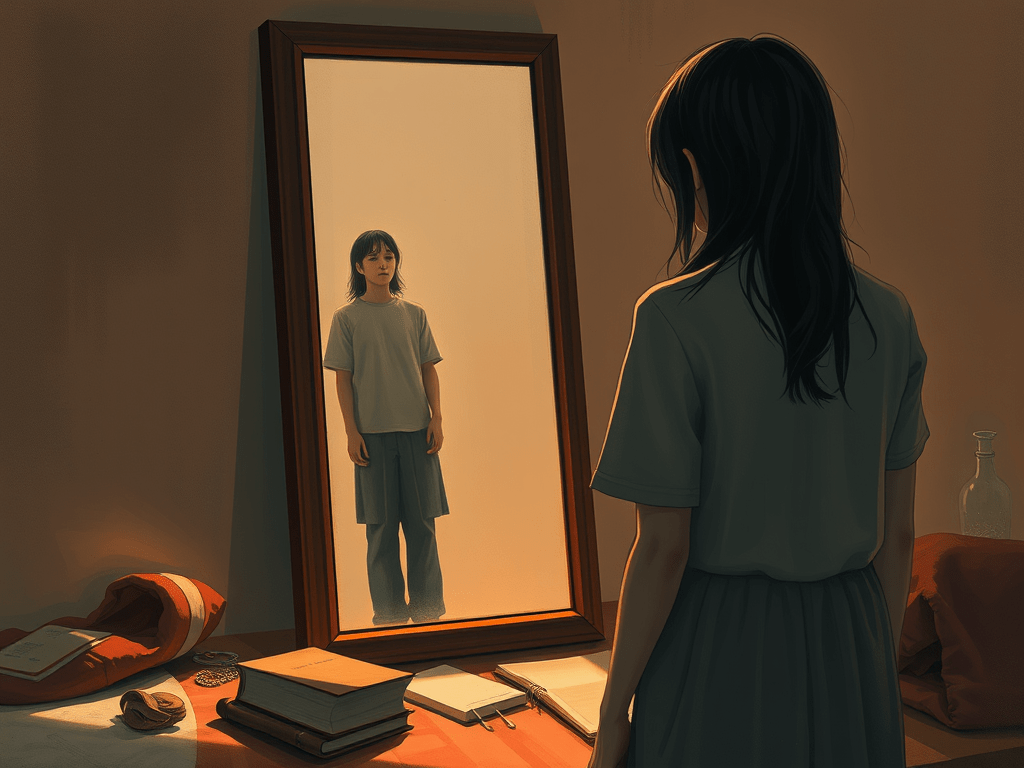
Therapy isn’t about endlessly talking about your problems. It’s about holding up a mirror so you can see what’s outside your awareness. A good therapist can help you identify your patterns, understand where they came from, and—most importantly—change your behavior so you stop recreating them.
You can’t think your way out of these patterns. You have to
act your way out—make different choices, build new neural pathways, and practice responding differently until the new way becomes familiar.
Step 5: Give Yourself Time
These patterns were years in the making. They won’t unravel overnight. Be patient with yourself. Celebrate small victories. And remember: insight without action is just an interesting thought. Real change happens when you consistently make different choices, even when they feel uncomfortable at first.
The Beautiful Truth: You Can Rewrite Your Story
Here’s what therapy—and life—teaches us:
You are not destined to repeat your parents’ patterns or replay your childhood wounds forever.
Yes, those early experiences shaped you. Yes, they created neural pathways and unconscious templates that influence your choices. But you are not a prisoner of your past. You’re the author of your story going forward—and authors can revise, edit, and even completely rewrite their narratives.
The woman who only felt chemistry with unavailable men? She eventually found herself genuinely attracted to kind, consistent partners. The man who always chose partners who mirrored his critical parent? He learned to value gentleness and built a healthy relationship. These changes are possible—but they require awareness, work, and a willingness to feel uncomfortable while new patterns become familiar.
Sometimes the safest thing you can do is take a risk. Sometimes the most courageous act is walking away from what feels familiar into the uncertainty of something better.
Moving Forward: From Familiar Pain to Healthy Love
If you’re reading this and recognizing yourself in these patterns, take heart. Awareness is the first—and most crucial—step toward change. You’re not broken, and you’re not doomed to repeat the past. You’re simply human, carrying the imprint of your earliest experiences into your adult life.
The Let It Go app is designed to support you in this journey of self-discovery and change. Use it to:
• Track your relationship patterns and triggers
• Reflect on how you feel in different relationships
• Practice new responses to old patterns
• Celebrate your progress as you build healthier relationship habits
Remember: The goal isn’t to never feel drawn to anyone or to become overly analytical about every relationship. The goal is to develop enough awareness that you can distinguish between familiar and good—and to choose the path that leads to genuine peace, respect, and healthy love.
Your unconscious patterns don’t have to be your destiny. With awareness, courage, and consistent effort, you can break free from the familiar and step into something truly extraordinary: a relationship where you don’t have to earn love, prove your worth, or recreate your childhood to finally feel chosen.
You deserve that. And it’s waiting for you—just beyond the bars of your familiar cage.
—
This article was inspired by a conversation between Dr. Andrew Huberman and psychotherapist Lori Gottlieb on the Huberman Lab podcast, where they explored the unconscious patterns that shape our relationship choices and how therapy can help us break free from cycles of familiar pain.






 Let it Go
Leave a comment