It turns out healing after a breakup has less to do with heartbreak and more to do with one surprisingly tiny digital decision. And most people get it wrong.
The moment your thumb hovers
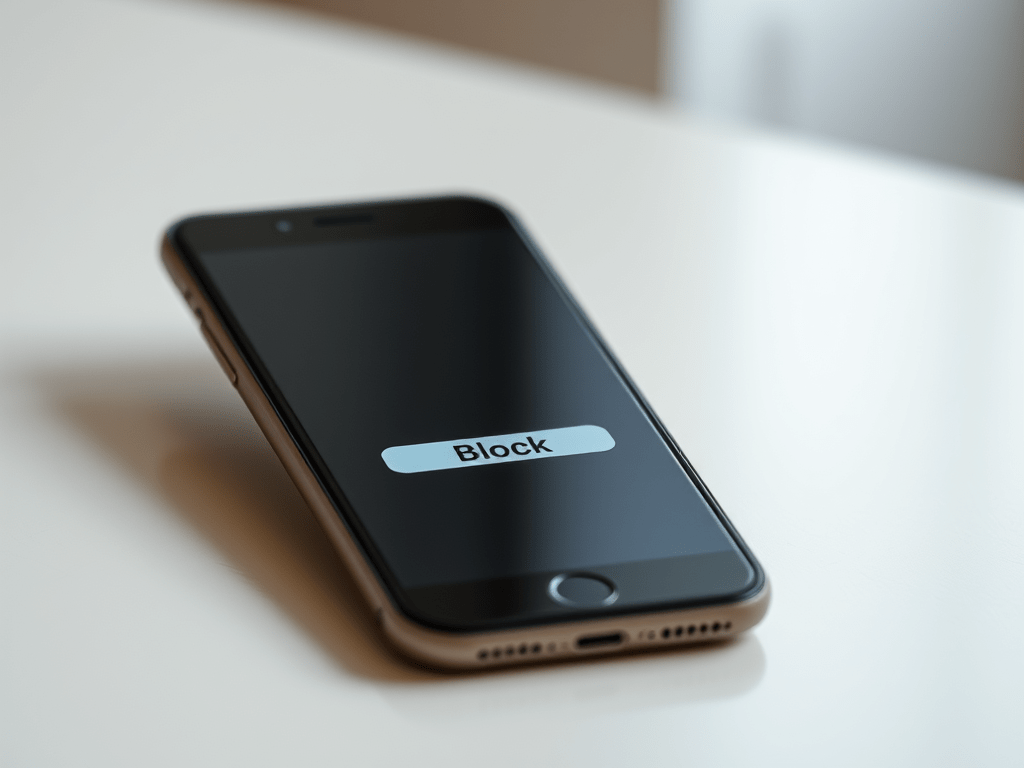
There is a moment after a breakup when your thumb just hangs over the block button and the screen suddenly feels heavier than a screen should. People act like blocking someone is a simple decision. But anyone who has been left, blindsided, confused, or cracked open knows it is not a tech action. It is an emotional referendum.
You aren’t deciding whether to remove someone. You’re deciding whether to stop waiting for them.
The question behind the question
Most people think the real dilemma is whether blocking is “too harsh.” But the deeper question is quieter. Will leaving access open keep the story alive in your head? Will the possibility of contact create a loop you can’t climb out of?
Your brain treats access like a door. As long as the door is open, even slightly, it believes the story is still in motion.
That is why this decision feels enormous even though it takes one tap. You aren’t blocking a person. You’re blocking the alternate universe where they might still reach out.
The psychology no one tells you
Researchers studying heartbreak keep seeing the same pattern. Recovery has almost nothing to do with the timeline of the relationship and everything to do with whether your environment is predictable.
If your ex can appear in your notifications whenever they feel lonely, guilty, or nostalgic, your nervous system never drops its guard. Your brain stays in alert mode, scanning for a message that could change everything.
Blocking doesn’t heal you because it is bold.
Blocking heals you because it ends unpredictability.
Unpredictability is what keeps your heart in survival mode.
The loop your brain lives in
Brains hate unfinished stories. They fill silence with scenarios. Interpret every micro-signal as meaning. Keep checking for some digital flicker that feels like proof that you still matter.
This is why certain attachment patterns make the post-breakup phase even more brutal. When you’re wired to chase clarity, the absence of clarity hijacks your entire system. Your ability to practice emotional regulation drops. A notification from your bank can send your heart into your throat because your body has been conditioned to brace for emotional impact.
This isn’t dramatic. It is biological.
The moment things finally quiet down
People tell themselves they’re “not ready” to block an ex. What they mean is they’re not ready to accept the finality that blocking represents. It’s easier to suffer than to end hope. But once you remove the possibility of a sudden re-entry, the internal noise starts to fade.
Blocking is less about taking control and more about creating quiet.
After it’s done, something subtle shifts. Your thoughts stop sprinting. Your days stop being shaped around anticipation. You have pockets of peace that used to be filled with what-ifs. Your emotional world finally matches your actual world.
This is the same reason the no contact rule works. Not because silence is powerful but because chaos is exhausting.
Once the chaos goes, your healing isn’t fighting upstream anymore.
The pattern underneath every heartbreak
When this clicks, you start seeing the pattern everywhere. Most heartbreak isn’t about missing the person. It’s about living in the suspense that follows them. You weren’t hurting because they were gone. You were hurting because your brain was still waiting for them to come back.
Recognizing this pattern is the real emotional upgrade.
It explains every past relationship where you felt stuck without knowing why.
It reveals the machinery underneath attachment.
It makes your reactions finally make sense.
The boundary that brings you back to yourself
So should you block your ex?
A better question is this.
Who do you become when you stop living in anticipation?
Blocking someone is not about punishing them. It is about stabilizing yourself. It is about choosing clarity over suspense. It is about closing a door your brain keeps pacing in front of. And when that pacing stops, your identity has room to come back online.
And if you want help navigating that phase, Let It Go exists for exactly this reason. It’s the best breakup app for people who need structure, calm, and emotional reinforcement during the hardest stretch of letting go. An app that allows you to track your No contact streak and helps you keep accountable to yourself.
Once your system stops waiting, everything else becomes possible.
That includes moving on.
That includes rebuilding yourself.
That includes feeling like yourself again.
The moment you stop waiting is the moment you start healing.








 Let it Go
Leave a comment